
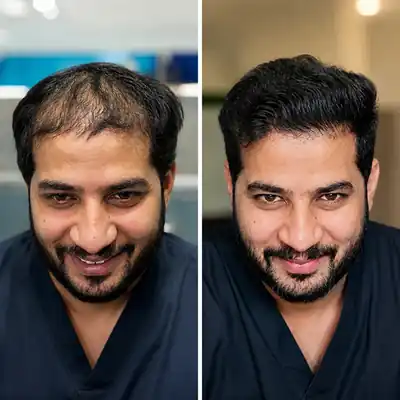
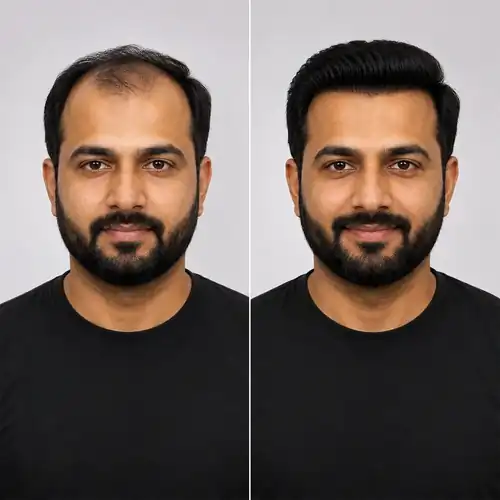
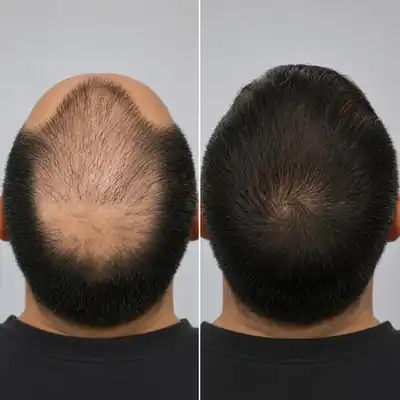
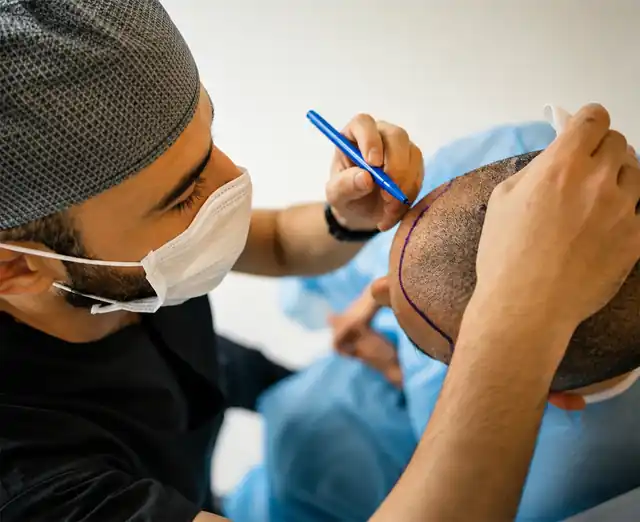
As a hair restoration clinic in Lahore, Reversage focuses on personalised transplants designed around your donor capacity, not generic graft estimates. Every case begins with a detailed scalp assessment, ensuring the technique matches your pattern of loss.
Most hair loss consultations in Lahore move fast toward a graft number and a price. At Reversage, that number comes after your donor area, hair caliber, scalp laxity, and pattern of loss have actually been examined. As a hair restoration clinic, we work across DHI and Hybrid FUE techniques and we’re equally direct when a surgical transplant isn’t the right first step. Hair Restoration in Lahore, done properly, is as much about managing expectations as it is about technique.
DHI hair transplant in Lahore uses a precision implanter pen to place each graft directly into the scalp, without the channel-opening step FUE requires beforehand. This gives tighter control over angle, depth, and direction, and suits patients focused on hairline density and a natural-looking growth pattern.
Hybrid FUE for hair growth combines manual and motorised extraction within the same session, balancing graft survival with the ability to cover larger areas efficiently. It's often the better fit for patients who need a higher graft count without compromising the quality of individual follicles.
PRGF treatment for hair loss uses growth factors drawn from your own blood to support follicle health, while MCT exosomes hair treatment adds a concentrated regenerative signal to encourage thicker, stronger regrowth. Both are used as standalone hair regrowth treatment or alongside a transplant to support graft settling.
Laser hair therapy uses low-level light to stimulate circulation and follicle activity in areas of early thinning. As a laser hair loss treatment in Lahore, it works best on active, miniaturized follicles rather than scalp that's already gone smooth and bald.
Not every case needs a scalpel. Hair growth treatment covers topical and prescription options that slow shedding and support existing hair, often recommended first for patients in the earlier stages of thinning, or alongside a transplant to protect non-transplanted hair.
Nanofat hair restoration uses a patient's own processed fat tissue, rich in stem cells, injected into the scalp to improve blood supply and follicle environment. It's typically used to support scalp health ahead of or alongside a transplant, rather than as a standalone density solution.
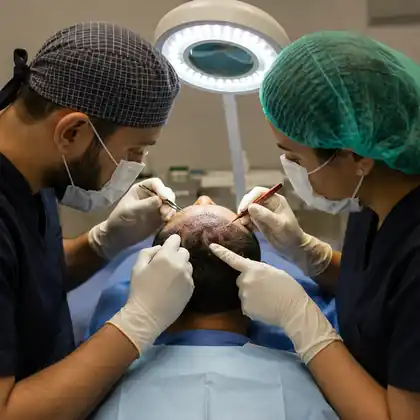
Reversage is trusted for transplant treatments because every step is guided by precision, planning, and realistic expectations. From assessing donor density to designing a natural hairline, each procedure is tailored according to patient’s requirements. With consultant oversight and structured aftercare, the focus is on results that grow in seamlessly and continue to improve over time.
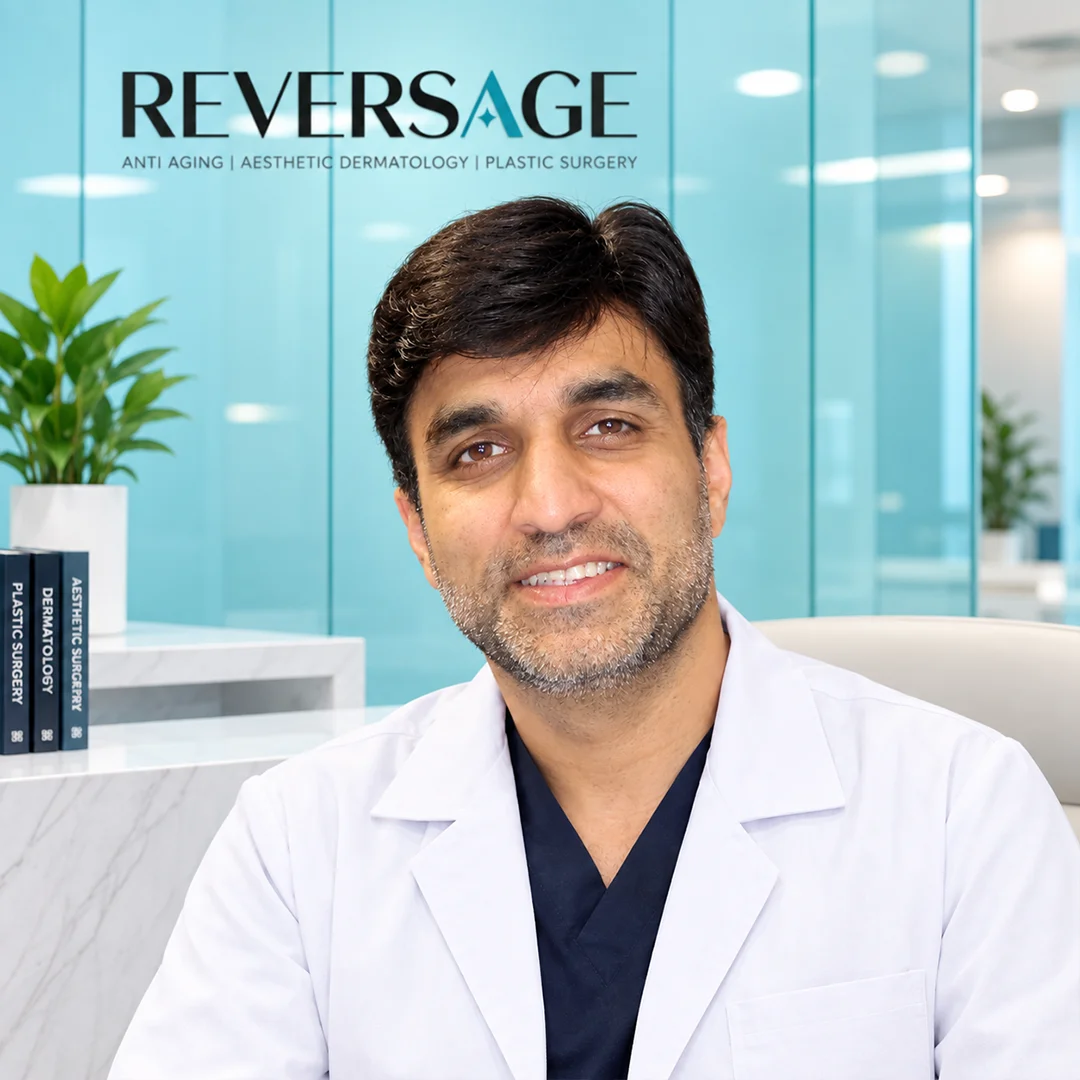
MBBS, Diplomate ABHRS, FISHRS
Hair Transplant Surgeon
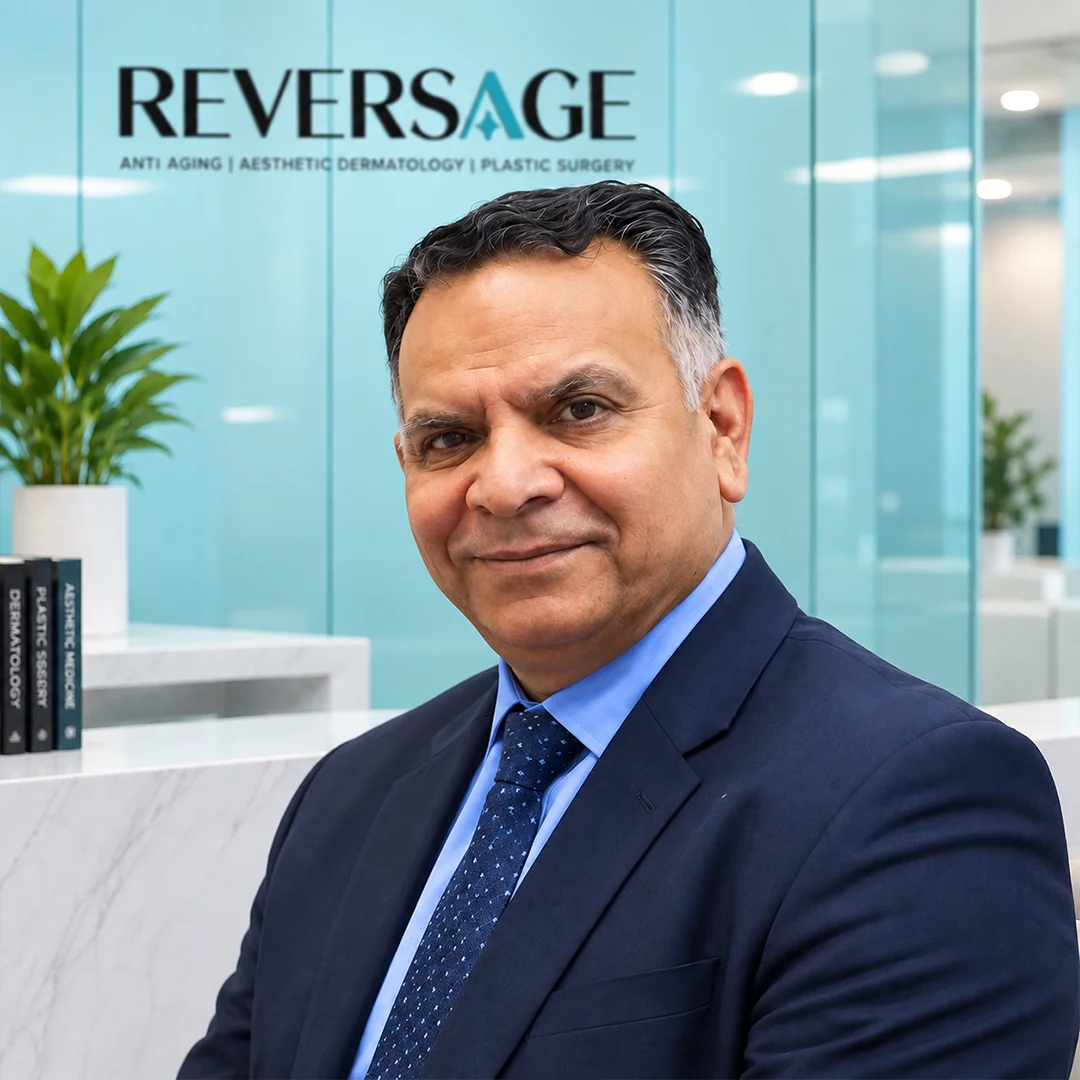
M.B.B.S., F.C.P.S., P.M.D.C.
Consultant Plastic Surgeon
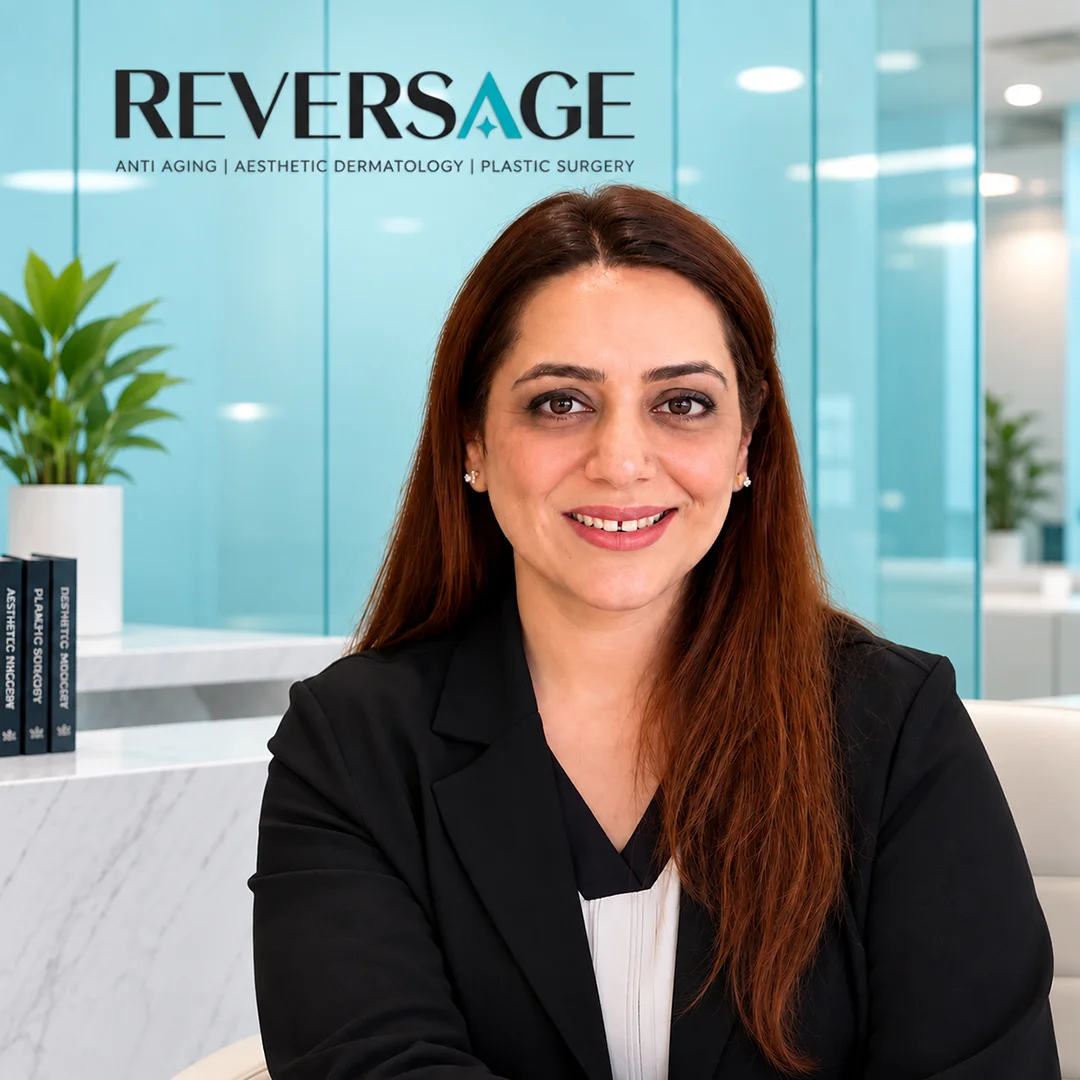
M.B.B.S., F.C.P.S.
Consultant Dermatologist
M.B.B.S., P.M.D.C.
Associate Doctor
Honest feedback, shared in their own words.
The best Cosmetic Clinic I have ever experienced! Professional and friendly staff… would highly recommend to anyone!!!
I go for regular appointments at Reversage and my skin is much healthier now! I would definitely recommend.
This is a wonderful clinic with very professional and friendly staff and up to date technology. They took me at short notice and were so accommodating.
The best Cosmetic Clinic I have ever experienced! Professional and friendly staff made me feel like family… would highly recommend to anyone!!!
You know you are in good hands the moment you walk in. My skin has never looked better.
A hair transplant moves hair follicles from a donor area, usually the back or sides of the scalp, to areas of thinning or baldness. Techniques differ mainly in how follicles are extracted and placed, but the underlying principle across FUE, FUT, and DHI stays the same.
The procedure is performed under local anesthesia, so patients typically feel pressure rather than pain during the transplant itself. Mild discomfort and tightness are common for a few days afterward, usually managed with prescribed medication. Your provider will walk you through what to expect for your case.
Transplanted follicles are typically taken from areas resistant to balding, so the transplanted hair generally continues growing long-term. Results depend on proper technique and healthy graft placement, and existing non-transplanted hair can still thin over time, which is why some patients pair a transplant with medical treatment.
There isn’t one universally best technique; DHI suits patients prioritizing precise, dense placement, while Hybrid FUE suits those needing higher graft counts across larger areas. The right choice depends on your donor density, hair caliber, and goals, confirmed at consultation.
Look for a provider who examines your scalp and donor area in detail before recommending a technique or graft number, rather than quoting a price on a phone call. Consultation depth is usually a better indicator than marketing claims.
Cost depends on graft count, technique, and the complexity of your case, so pricing varies significantly between patients. Reversage provides a personalized quote after your consultant examines your donor area and confirms the technique best suited to your pattern of loss.
Aftercare typically includes gentle scalp care, avoiding direct sun and strenuous activity for a set period, and following a wash routine your provider outlines. Follow-up appointments track graft settling and early growth, so any concerns are caught early rather than left unmonitored.
FUE extracts follicles and opens recipient channels before implanting them, while DHI implants follicles directly using a specialized pen, without a separate channel-opening step. DHI generally allows tighter control over density and angle; FUE can suit larger sessions more efficiently.
Transplanted hair typically sheds within the first few weeks, a normal part of the process, before new growth begins around three to four months in. Fuller, more visible results generally develop between eight and twelve months, with final density settling within a year.
FUE removes individual follicles one at a time, leaving minimal scarring, while FUT removes a strip of scalp tissue that’s then dissected into grafts, leaving a linear scar. FUE has become more commonly requested for its less invasive recovery.
PRGF (Plasma Rich in Growth Factors) uses concentrated growth factors drawn from your own blood, injected into the scalp to support follicle health and encourage regrowth. It’s used both as a standalone treatment for early thinning and alongside transplants to support graft recovery.
Exosome hair treatment introduces concentrated regenerative signalling molecules to the scalp, aimed at supporting follicle activity and improving the scalp environment for growth. It’s typically used alongside PRGF, microneedling, or a transplant, rather than as a first standalone step for advanced hair loss.
Subscribe for skincare insights, event invitations, and updates from our clinical team.